Launch offer — valid today only

📄 Digital book in PDF · read it on your phone or print it

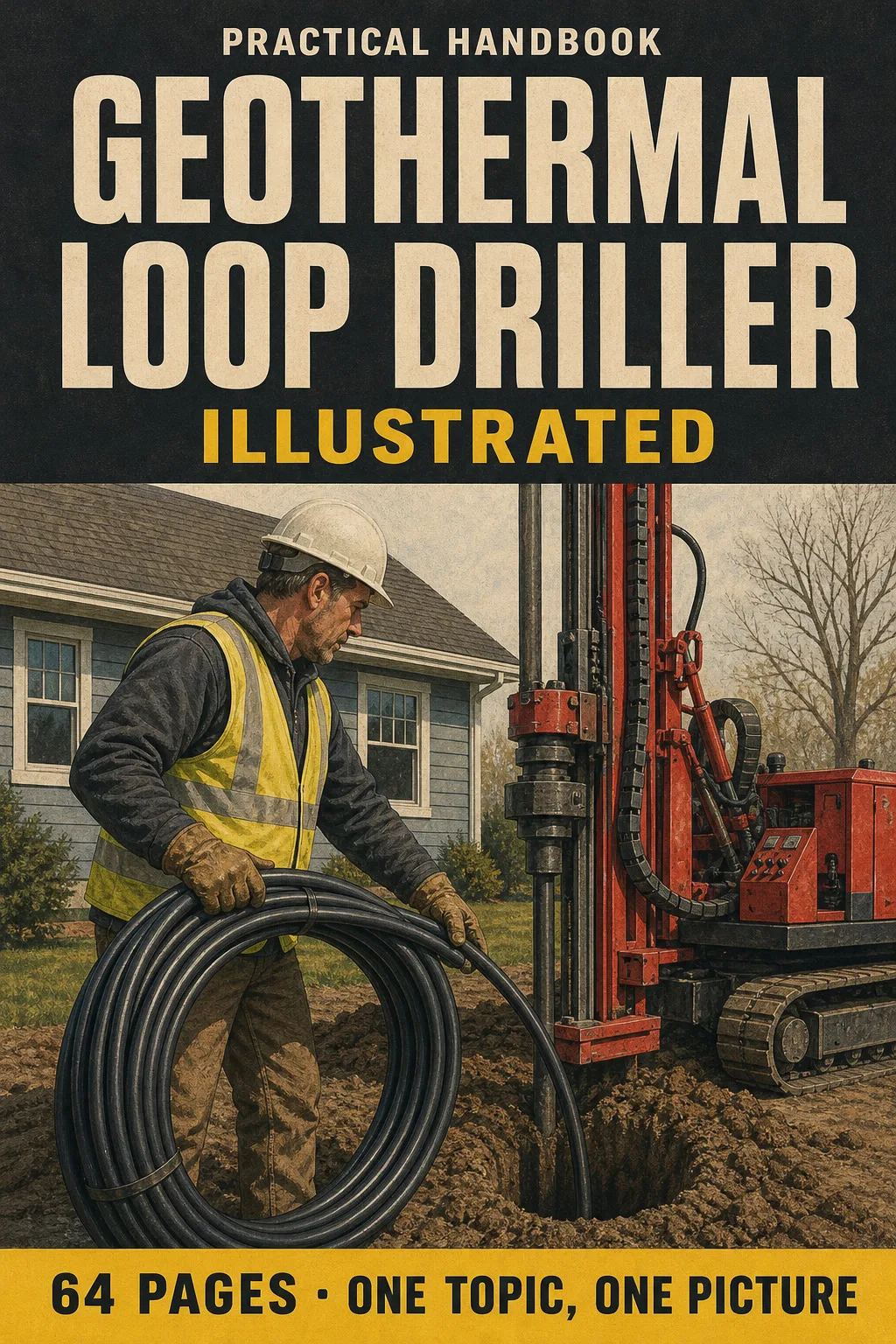
Vertical Closed-Loop Drilling and the CVCLD Exam in Drawings Every Step on Its Own Page

Geology, drilling methods, HDPE fusion, pressure testing, loop insertion, bottom-up grouting, headers and purging. Every topic gets its own page: the drawing first, then what you need to remember. 64 illustrated pages.

START STUDYING THIS WAY

🔒 Secure checkout · PDF by email · 30-day guarantee

Every topic, its own pageEach step drawn, with the explanation right next to it
64 illustrated pages8 parts, from what a vertical closed loop does to the exam review
Up-to-date sourcesNGWA CVCLD content, IGSHPA standards, CSA/IGSHPA C448 and ASTM F2620
PDF by emailFormat

Look Inside the Book

Every page has one big drawing and a box with the numbers and steps you need to know:

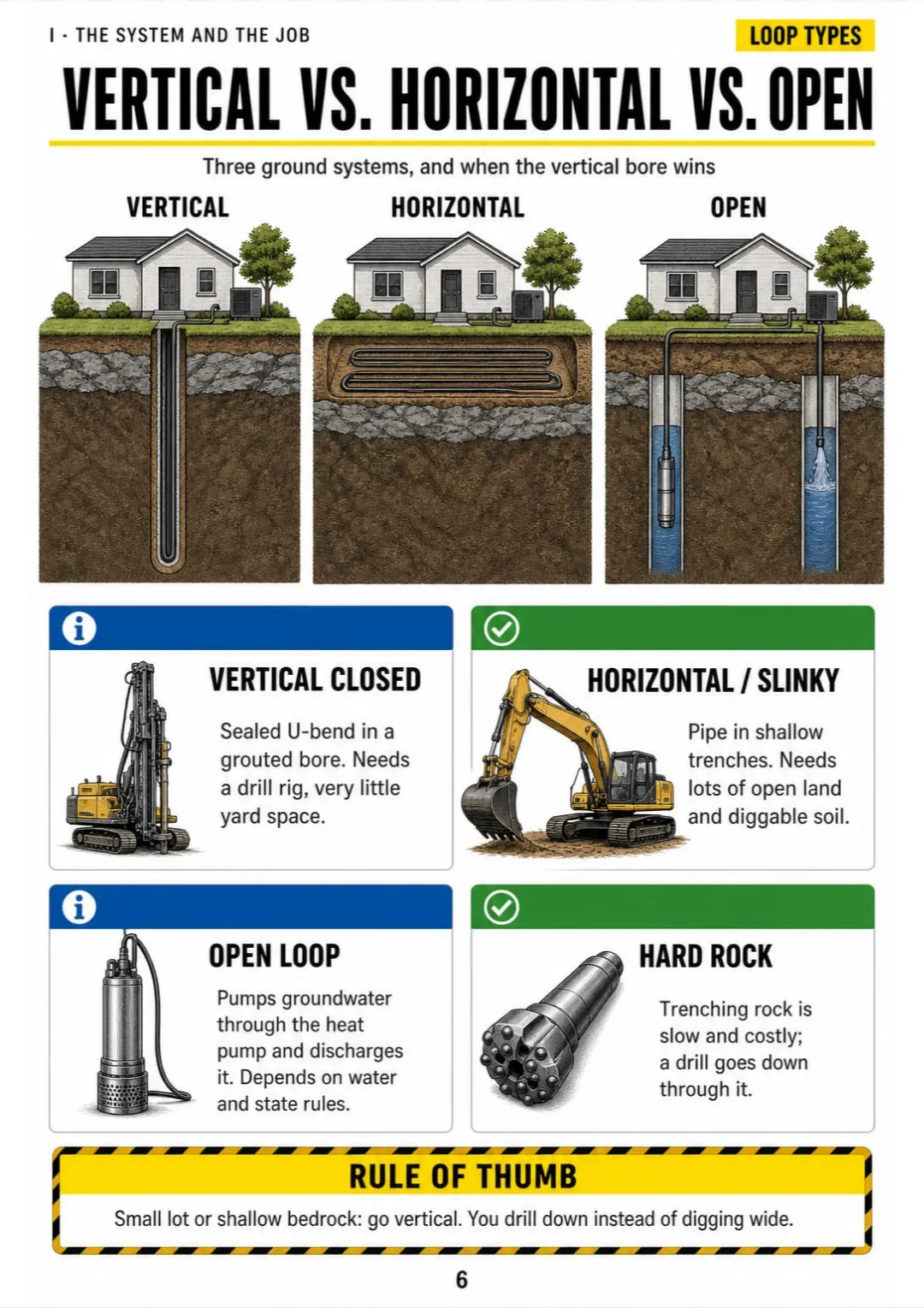
Vertical, horizontal and open loop side by side: space, rock and water decide.
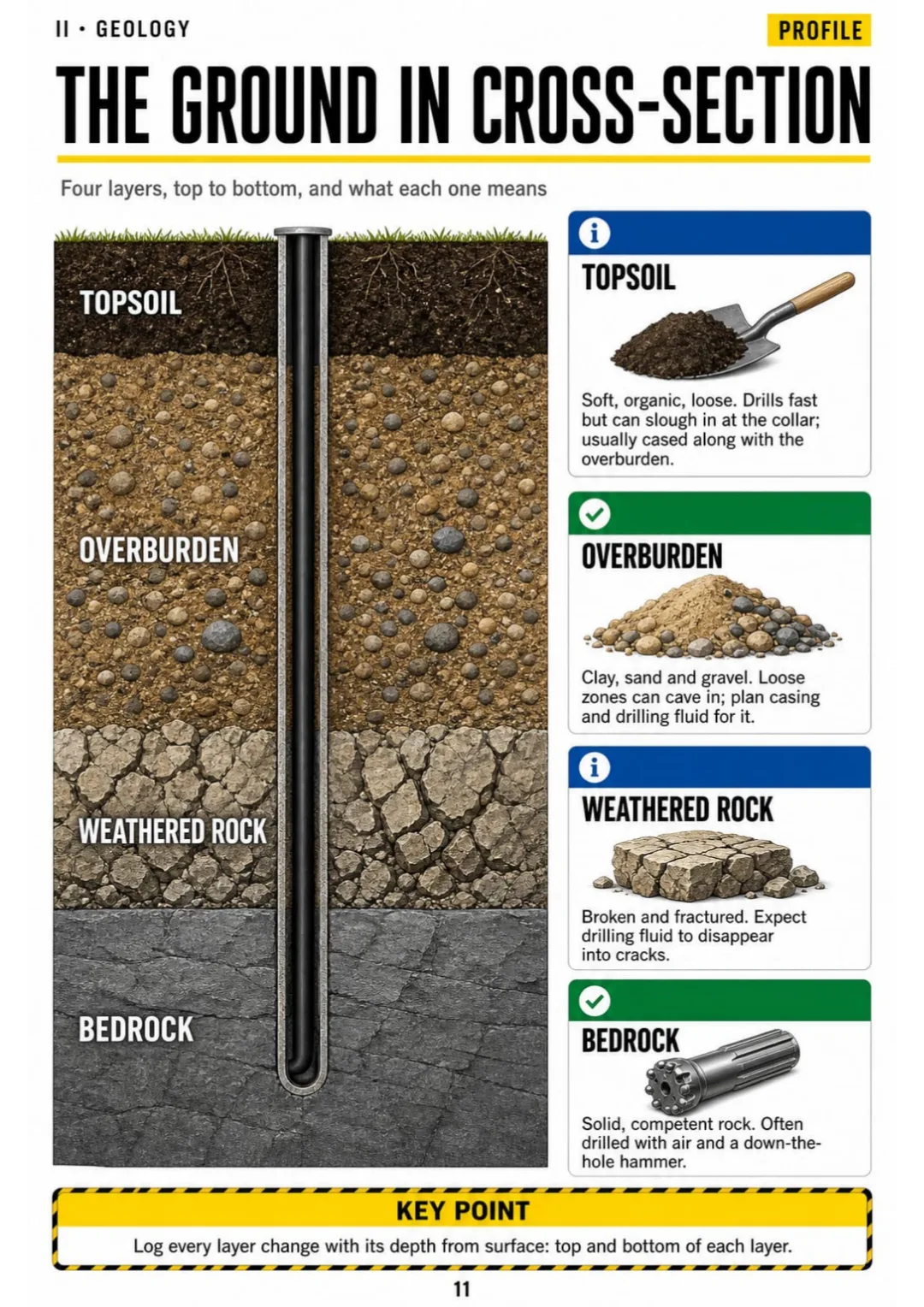
Topsoil, overburden, weathered rock, bedrock: what each layer means for drilling and grouting.
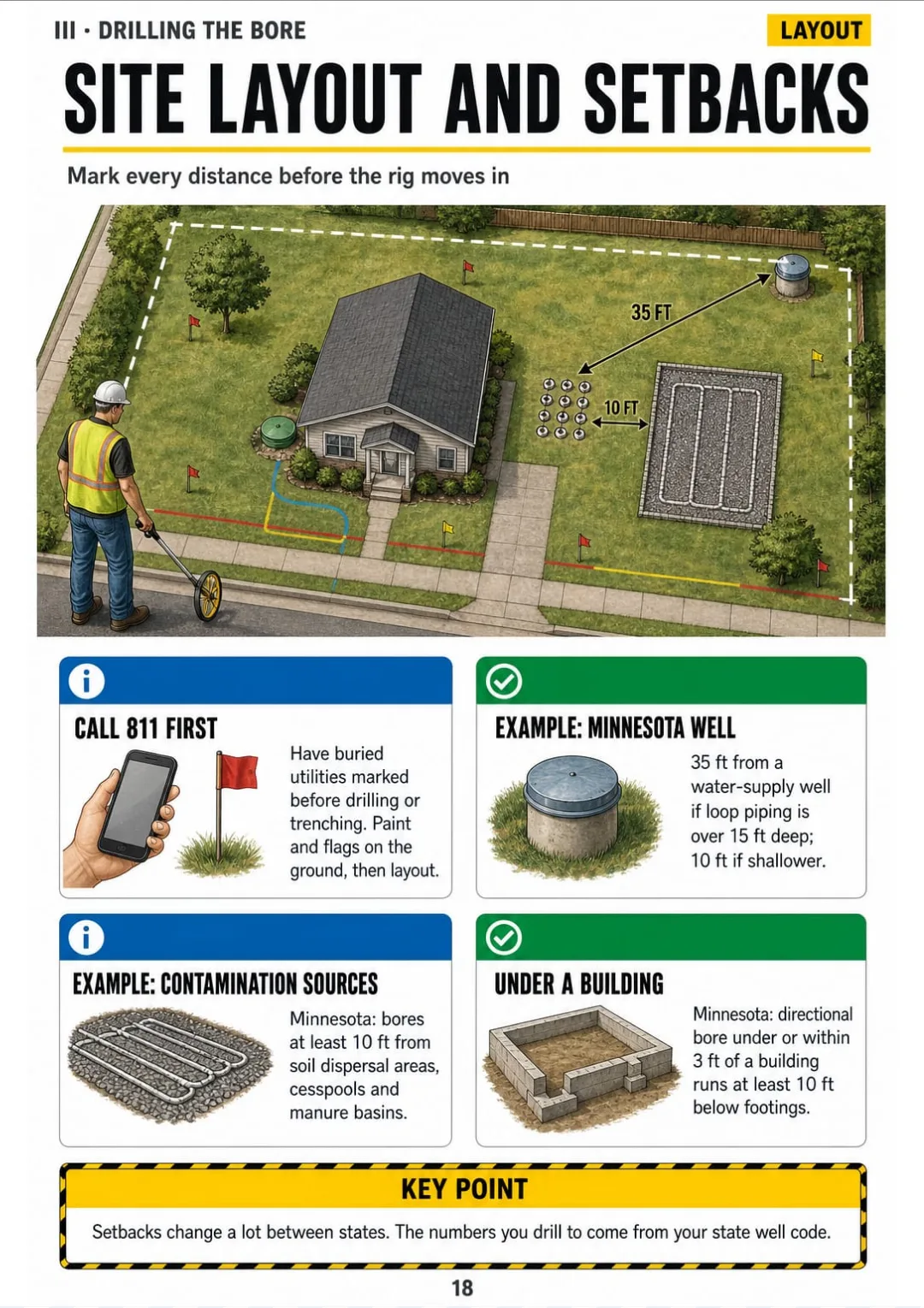
Minnesota example: 35 ft from a water well for loops deeper than 15 ft, 10 ft if shallower.
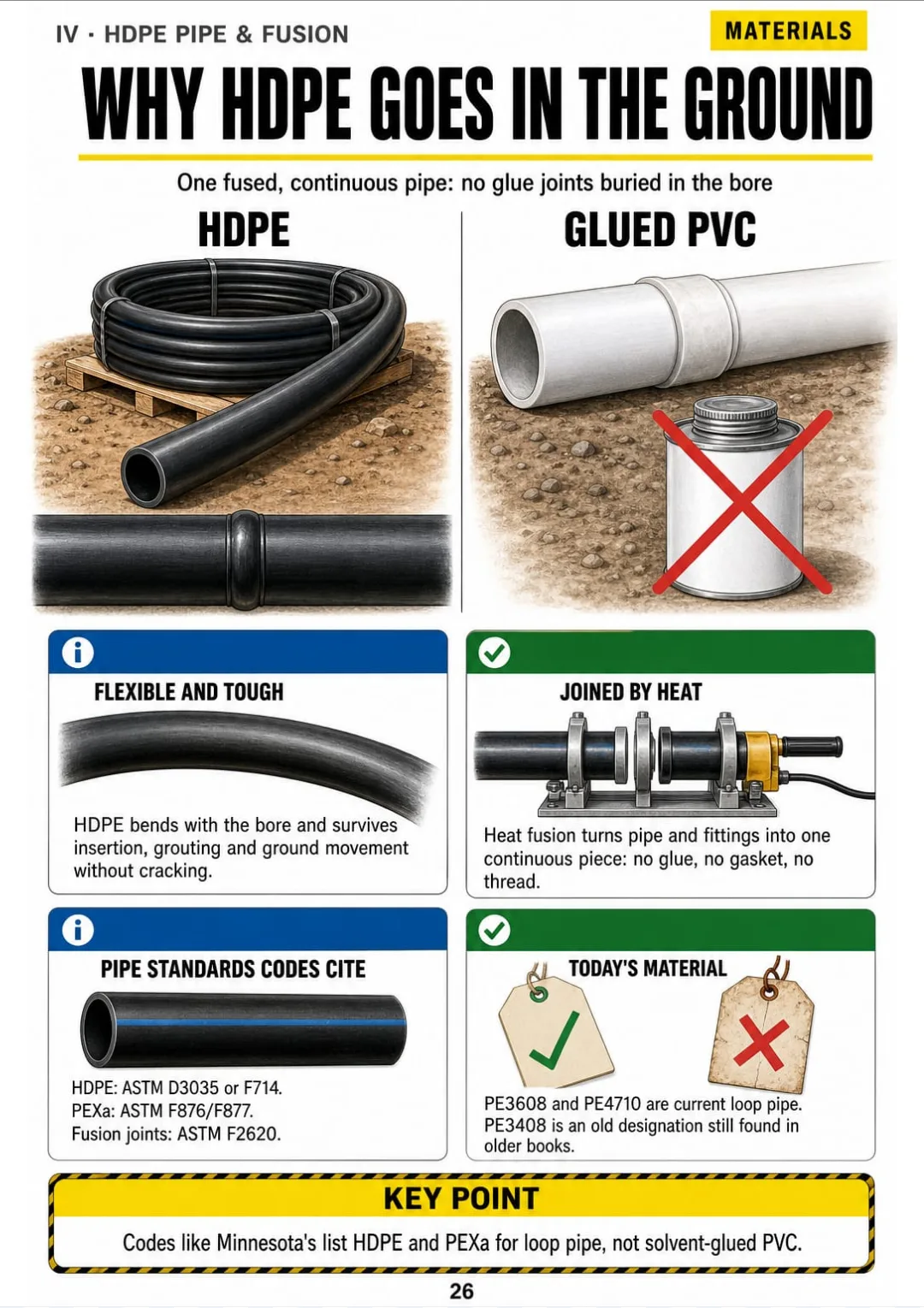
HDPE vs. glued PVC: one fused piece per ASTM D3035 and F2620
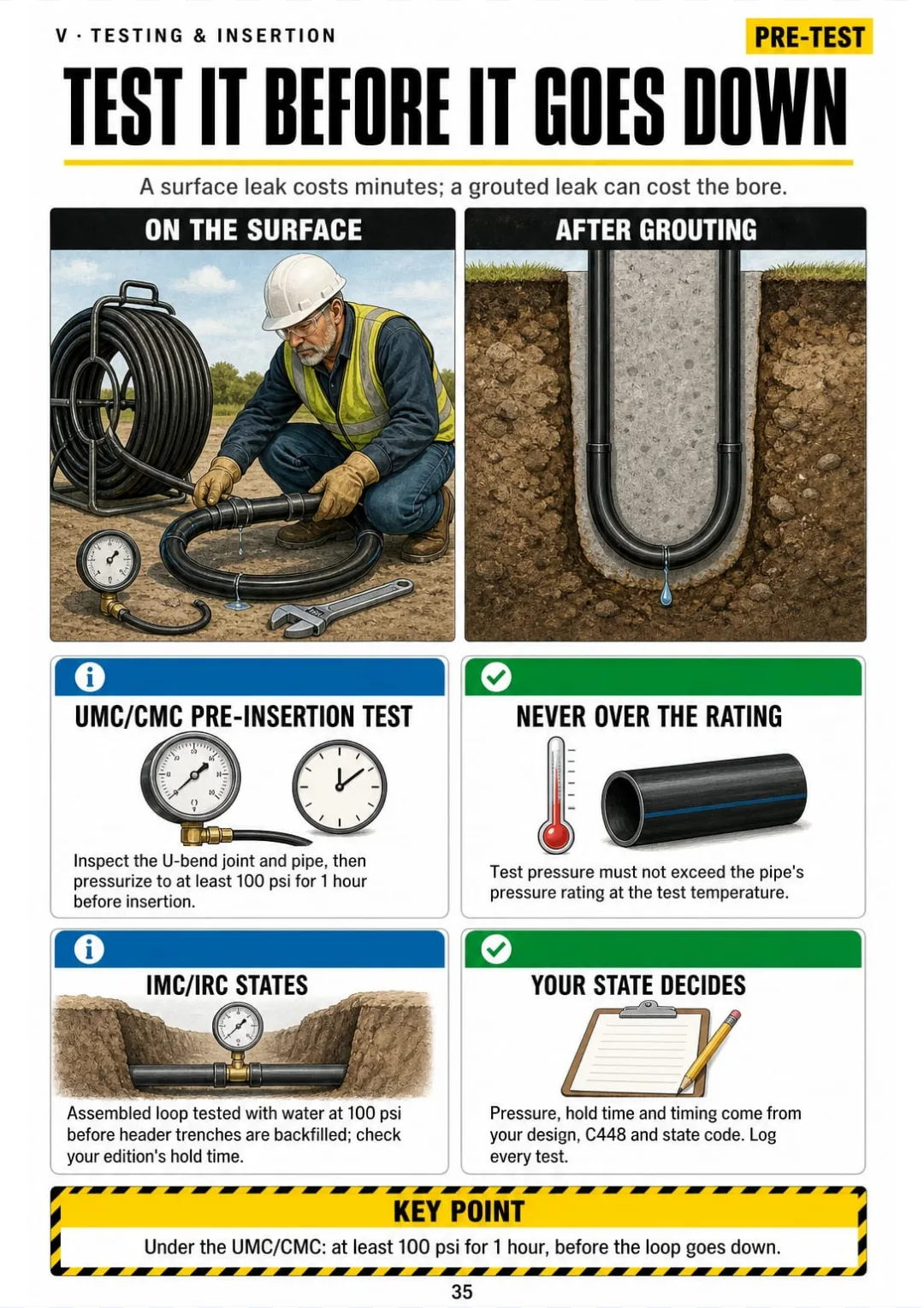
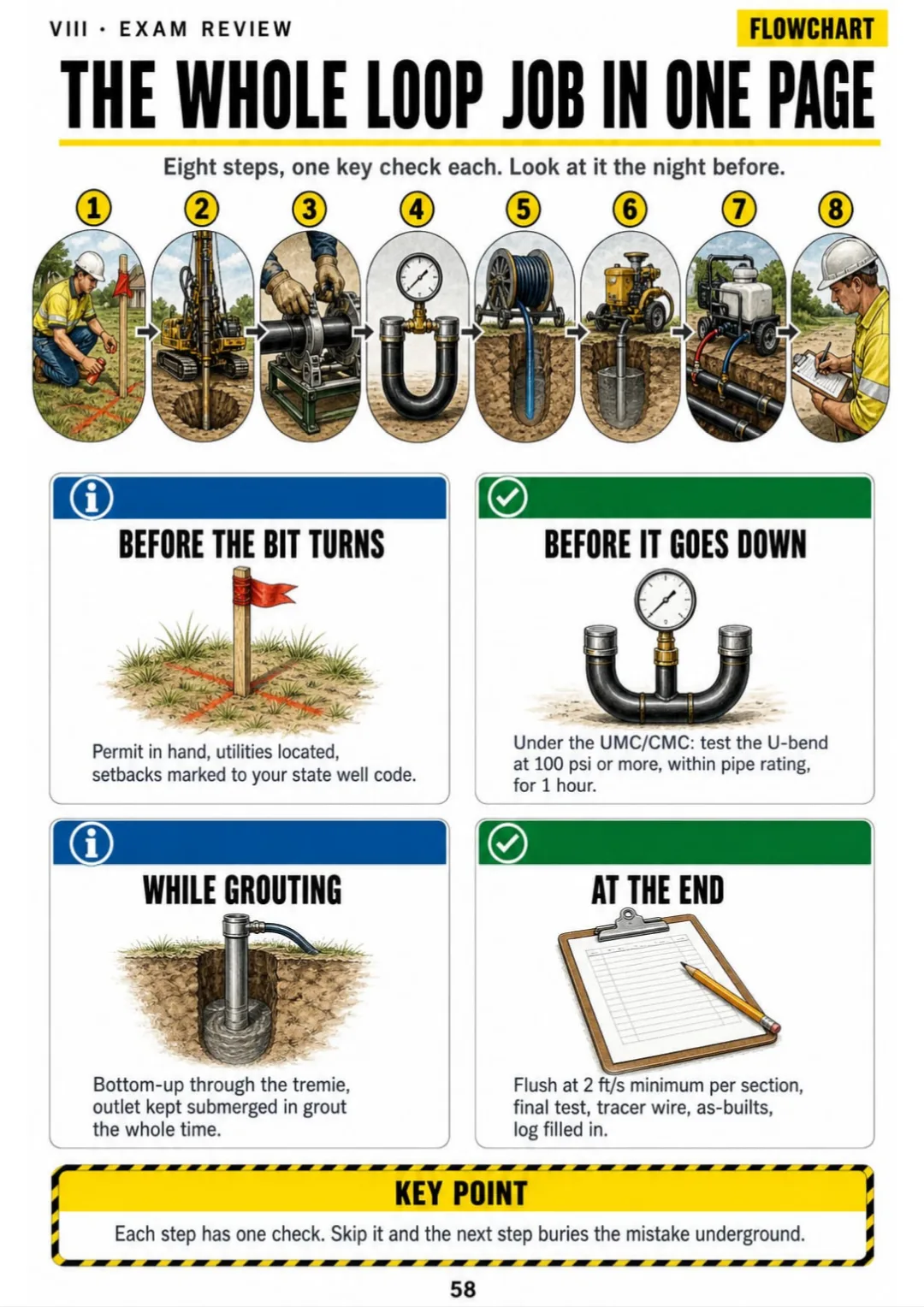
UMC/CMC: inspect and pressurize the U-bend to at least 100 psi for 1 hour before insertion.
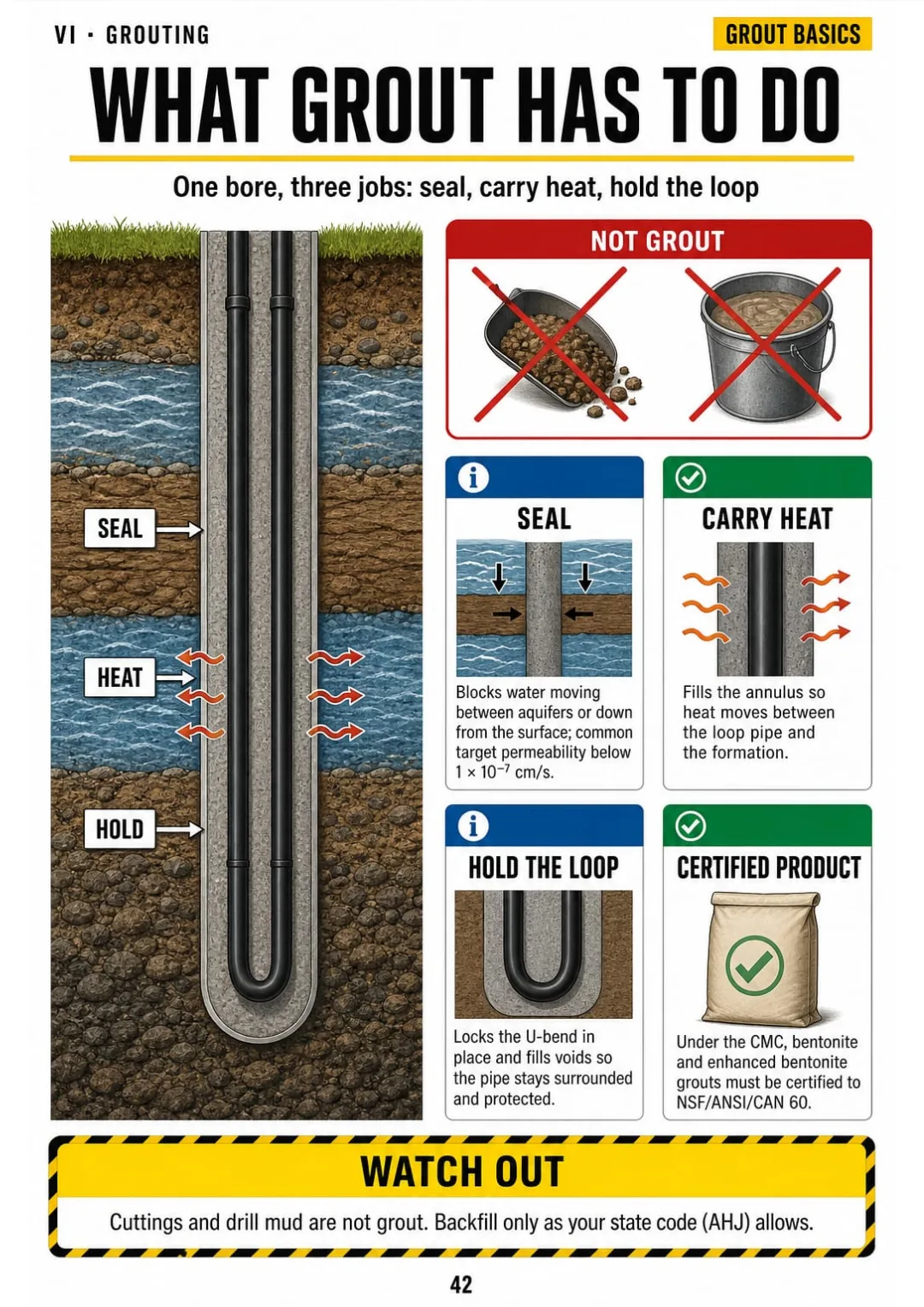
Seal, heat, hold: the three jobs of grout, drawn on one bore.
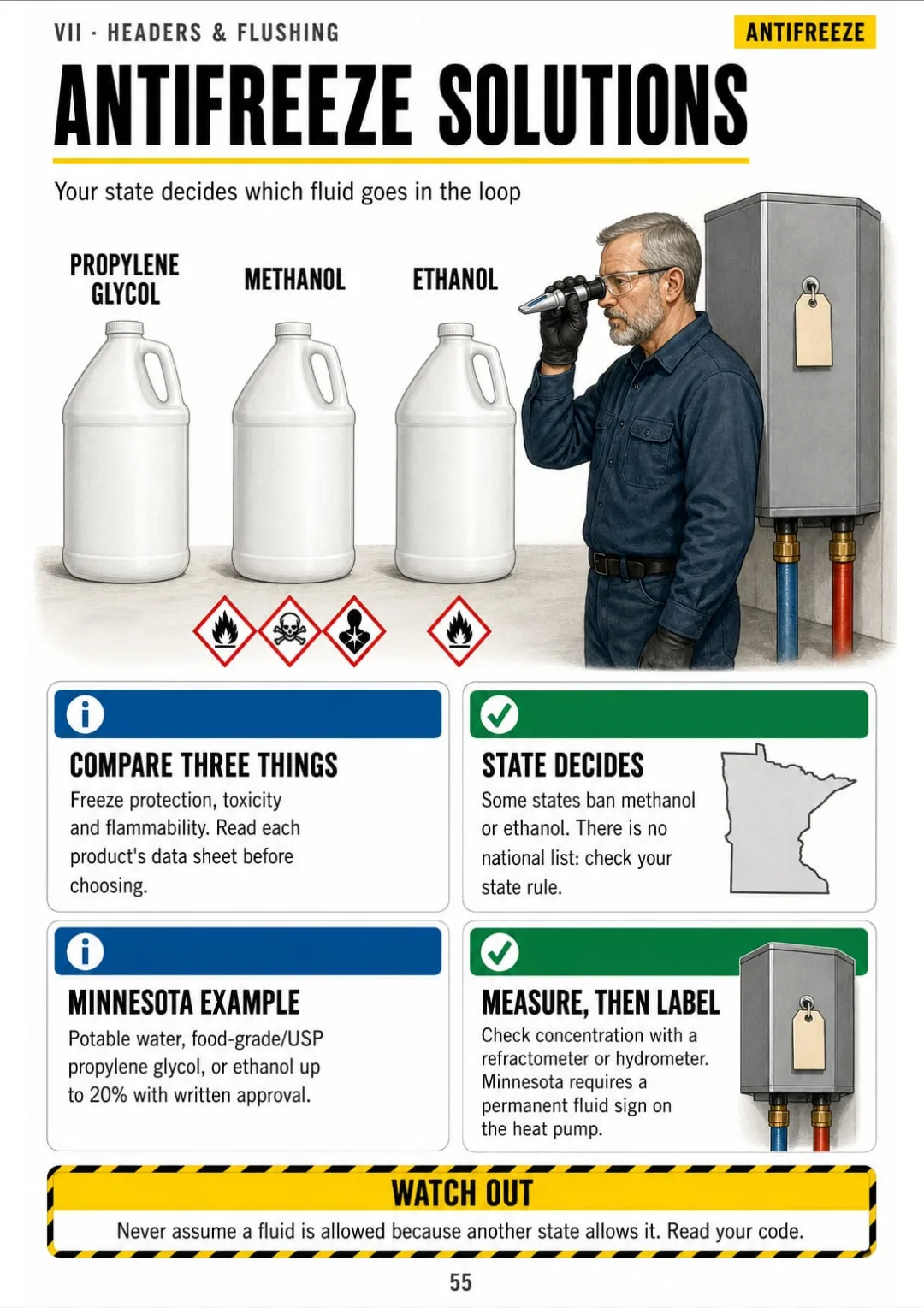
PG, methanol, ethanol compared; allowed fluid set by state, checked with a refractometer
Layout to final log: 8 steps, each with the one check that matters.

Swipe to see more →

These are real pages from the book. The table of contents is the full one: 8 parts and 60 topics.

The Problem Isn't You. It's How It Was Explained.

You're on a new site. The rig is parked, there's a water well near the property line, and you have to stake the first bore. How far does it have to be from that well?

The setback rules are in the manual, spread across paragraphs. The distances change with loop depth, with the type of well and with the state. You read it last night, and by morning it's gone.

Minnesota example: 35 ft from a water well for loops deeper than 15 ft, 10 ft if shallower.

In the book, site layout is one drawing: the house, the well, the property line and the bores, with the distances marked on it. Minnesota example: 35 ft from a water well for loops deeper than 15 ft, 10 ft if shallower. There's also a note to check your own state's code.

The rest of the job works the same way: the ground in cross-section, HDPE fusion, the 100 psi pressure test, the three jobs grout does, the trench back to the house. Each one has its own page.

You look at the layout, see the distances and stake the bore. No digging back through the manual.

COMPARE FOR YOURSELF

The Same Topic, Two Ways to Study It

THIS
  • The manual: line after line
  • Soil and rock layers explained only in words
  • You show up to the exam with doubts
Subsurface conditions at a vertical closed-loop site typically comprise a sequence of strata beginning with a surficial organic horizon (topsoil), underlain by unconsolidated overburden deposits of variable thickness and composition, including glacial till, alluvium, sand and gravel, which may in turn grade into a weathered bedrock transition zone exhibiting reduced competency, prior to encountering competent consolidated bedrock. Each stratum presents distinct implications for borehole stability, selection of drilling method, potential for lost circulation, and the specification and placement of grouting materials.
FOR THIS
  • The ground drawn in cross-section
  • What each layer means, in one box
  • You see it and you get it
Topsoil, overburden, weathered rock, bedrock: what each layer means for drilling and grouting.
CONTENTS

Take a Look at the 8 Parts and 60 Topics

The system, geology, drilling the bore, HDPE and fusion, pressure testing and insertion, grouting, headers and purging, and exam review: 64 pages, all illustrated.

IThe System and the Job · pp. 5-10
  1. What a Vertical Closed Loop Does
  2. Closed Loop vs. Open Loop vs. Horizontal
  3. The Job in One Sequence
  4. Who Does What on a Loop Job
  5. Heat Transfer Basics for Drillers
  6. Codes, Permits and Certification
IIGeology and Groundwater · pp. 11-17
  1. Reading the Ground in Cross-Section
  2. Unconsolidated vs. Consolidated Formations
  3. Aquifers and the Water Table
  4. Thermal Conductivity of Soil and Rock
  5. Reading Cuttings at the Rig
  6. Filling In the Well Log
  7. Problem Formations
IIIDrilling the Bore · pp. 18-25
  1. Site Layout and Setbacks
  2. Bore Spacing and Depth
  3. Mud Rotary Drilling
  4. Air Rotary and Down-the-Hole Hammer
  5. Sonic and Dual-Rotary Methods
  6. Drilling Fluid: Bentonite and Polymers
  7. Lost Circulation and Hole Collapse
  8. Bore Diameter and the Annulus
IVHDPE Pipe and Fusion · pp. 26-34
  1. Why HDPE for Ground Loops
  2. Reading the Print Line on the Pipe
  3. SDR and Pressure Rating
  4. Pipe Sizes in a Loop System
  5. The U-Bend
  6. Butt Fusion Step by Step
  7. Socket Fusion Step by Step
  8. Electrofusion
  9. Good Joint vs. Bad Joint
VPressure Testing and Loop Insertion · pp. 35-41
  1. Why Test Before It Goes Down
  2. Hydrostatic Pressure Test Setup
  3. Reading a Pressure Test
  4. Filling the Loop with Water Before Insertion
  5. Weighting and Inserting the Loop
  6. Installing the Tremie Pipe
  7. When the Loop Won't Go Down
VIGrouting the Bore · pp. 42-49
  1. What Grout Has to Do
  2. Bentonite Grout
  3. Thermally Enhanced Grout
  4. Cement-Based Grout
  5. Mixing Grout in the Right Order
  6. Grouting Bottom-Up with the Tremie
  7. Grout Volume Calculation
  8. Settling, Top-Off and Surface Seal
VIIHeaders, Flushing and Purging · pp. 50-57
  1. Trenching from Bores to the House
  2. Parallel vs. Series Circuits
  3. Reverse-Return Header
  4. Manifolds and Vaults
  5. Flushing and Purging Air
  6. Antifreeze Solutions
  7. Final System Pressure and Flow Test
  8. Tracer Wire, Marking and As-Builts
VIIIExam Review and Field Checklists · pp. 58-64
  1. The Job in One Page
  2. Key Numbers and Formulas
  3. Terms You Must Know
  4. Pre-Drill Checklist
  5. Loop and Grout Checklist
  6. Most Frequent Mistakes on the Job
  7. How to Use This Book Before the Exam

One Page, One Topic, All Clear

Think of it this way:

The loop is fused and on the reel. Before it goes down the bore, you have to test it. What pressure, and for how long?

You open the page on testing and see the U-bend drawn with the gauge on it: at least 100 psi for one hour, before insertion, with the code it comes from (Uniform Mechanical Code) and a note to check what your state requires.

UMC/CMC: inspect and pressurize the U-bend to at least 100 psi for 1 hour before insertion.

Same with the ground in cross-section, setbacks on site, why HDPE is fused and not glued, the three jobs of grout and the trench back to the house: each one has its own page.

Geothermal Loop Driller Illustrated is 64 pages in 8 parts, one topic per page, all drawn, with a full exam review and field checklists at the end.

What you see drawn, you don't have to memorize.

What's Inside Geothermal Loop Driller Illustrated:

Ipp. 5-10

The System and the Job

What a vertical closed loop does, how it compares with open and horizontal loops, the whole job in one sequence, who does what, heat transfer basics, and codes, permits and certification.

IIpp. 11-17

Geology and Groundwater

The ground in cross-section, unconsolidated vs. consolidated formations, aquifers and the water table, thermal conductivity, reading cuttings, filling in the well log, and problem formations.

IIIpp. 18-25

Drilling the Bore

Site layout and setbacks, bore spacing and depth, mud rotary, air rotary and DTH hammer, sonic and dual-rotary, bentonite and polymers, lost circulation, and the annulus.

IVpp. 26-34

HDPE Pipe and Fusion

Why HDPE, reading the print line, SDR and pressure rating, pipe sizes, the U-bend, butt, socket and electrofusion step by step, and a good joint next to a bad one.

Vpp. 35-41

Pressure Testing and Loop Insertion

Why you test before it goes down, the hydrostatic test setup, reading the gauge, filling with water, weighting and inserting the loop, the tremie pipe, and what to do when it won't go down.

VIpp. 42-49

Grouting the Bore

What grout has to do, bentonite, thermally enhanced and cement-based grouts, mixing in the right order, bottom-up tremie grouting, volume calculation, and top-off and surface seal.

VIIpp. 50-57

Headers, Flushing and Purging

Trenching to the house, parallel vs. series, the reverse-return header, manifolds and vaults, flushing and purging, antifreeze, the final pressure and flow test, and as-builts.

VIIIpp. 58-64

Exam Review and Field Checklists

The job on one page, key numbers and formulas, terms you need to know, pre-drill and loop-and-grout checklists, the most frequent mistakes, and how to use the book before the exam.

At the end of the book: Exam review with key numbers, formulas and terms, plus pre-drill and loop-and-grout checklists.


Plus: 2 Free Books

Bonus 1: Loop Driller Practice Questions (exam-style, with answers explained)

BONUS 1: «Bonus 1: Loop Driller Practice Questions (exam-style, with answers explained)»

Value on its own: US$ 17.90

Test yourself on geology, fusion, pressure testing and grouting, and see why each answer is right, so you can find your weak spots before exam day.

Bonus 2: Common Loop Install Mistakes + Quick-Reference Cards

BONUS 2: «Bonus 2: Common Loop Install Mistakes + Quick-Reference Cards»

Value on its own: US$ 14.90

The most frequent mistakes on the job shown before and after, plus one-page cards for grout, fusion and pressure tests you can print and keep in the truck.

Geothermal Loop Driller Illustrated with 2 Free Books

  • Geothermal Loop Driller Illustrated: 64 illustrated pagesUS$ 63
  • BONUS 1: Bonus 1: Loop Driller Practice Questions (exam-style, with answers explained)US$ 17.90
  • BONUS 2: Bonus 2: Common Loop Install Mistakes + Quick-Reference CardsUS$ 14.90
  • High-resolution PDF to printIncluded
Total value US$ 95.80
YOUR PRICE:
US$ 27
You save US$ 68.80
YES, I WANT GEOTHERMAL LOOP DRILLER ILLUSTRATED FOR US$ 27

📄 This is a digital PDF book sent to your email: nothing is printed or shipped.

Secure purchaseEncrypted payment30-day guarantee

PDF by email: We email you Geothermal Loop Driller Illustrated as a PDF, together with the two free books. It's a single payment: no installments, no extra charges.

Who This Book Is For

You're learning the loop side

You're learning the loop side

Coming from water wells or HVAC, you get the whole closed-loop job in the order it happens on site, one drawing per step.

Your CVCLD exam is coming up

Your CVCLD exam is coming up

You review geology, fusion, pressure tests and grout one page at a time, then check yourself with the practice questions.

You already run the rig

You already run the rig

You keep the numbers and checklists handy, printed and in the truck, for when a setback or a test pressure needs a second look.

Everything You Get Today

US$ 95.80US$ 27
YES, I WANT GEOTHERMAL LOOP DRILLER ILLUSTRATED FOR US$ 27

📄 This is a digital PDF book sent to your email: nothing is printed or shipped.

30DAYS
GUARANTEE

30-Day Guarantee

Try Geothermal Loop Driller Illustrated for 30 days, bonus books included.

We refund everything if the file won't open, if the book isn't what you see here, if you were charged twice or if the email doesn't arrive. Just email us.

You pay once. No subscriptions.

Frequently Asked Questions

Is this for me if I drill water wells or install HVAC and I'm moving into geothermal loops?

Yes. It isn't a beginner's book and it doesn't teach you how to run a rig or a heat pump. It lays out the closed-loop side (layout, fusion, pressure testing, insertion, grout, headers, purging) one drawn page at a time, in job order. Coming from HVAC, the bore side is the part you'll use most.

Where does the content come from?

From the NGWA CVCLD exam content, IGSHPA design and installation standards, CSA/IGSHPA C448, ASTM F2620 and D3035/D3350, and state well construction codes. It's written for U.S. jobs, in feet, psi and gallons. Setbacks and test rules change by state, so state numbers are shown as clearly marked examples, and every standard is flagged so you can check it against your state's current code.

Is this official material?

No. It's an independent illustrated study book. It isn't published or endorsed by NGWA, IGSHPA or any state agency.

Does it replace a training course?

No. It helps you review and organize what you learn in training and on the job. It doesn't give you a certificate or continuing education credits: certification comes only from your certifying body. Your state's code and your certifying body always come first.

Are the practice questions the ones on the exam?

No. They're written for this book, in exam style, with the answers explained. They're not official exam questions.

When and how do I get it?

The book and both bonus books come as PDFs by email, sent to the address you enter at checkout.

Do I have to pay every month?

No. It's a one-time payment, not a subscription. You pay once and get the book and both bonus books as PDFs by email.

Can I get it on paper?

Yes. The PDF is made to print. Print the whole book or just the pages you want in the truck.

How does the refund work?

You have 30 days. We refund everything if the file won't open, if the book isn't what you see on this page, if you were charged twice or if the email doesn't arrive: just email us.

Before You Close This Page

No more rereading pages that don't stick.

Setbacks, test pressures and grout: you see them drawn, and that's it.

You walk into the exam knowing where everything is.

Drawings make studying faster.

The book is right below.

One-time payment: US$ 27 · Guarantee: 30 days · PDF by email

YES, I WANT GEOTHERMAL LOOP DRILLER ILLUSTRATED FOR US$ 27

📄 This is a digital PDF book sent to your email: nothing is printed or shipped.